Mass protests took place in France, government announced negotiations
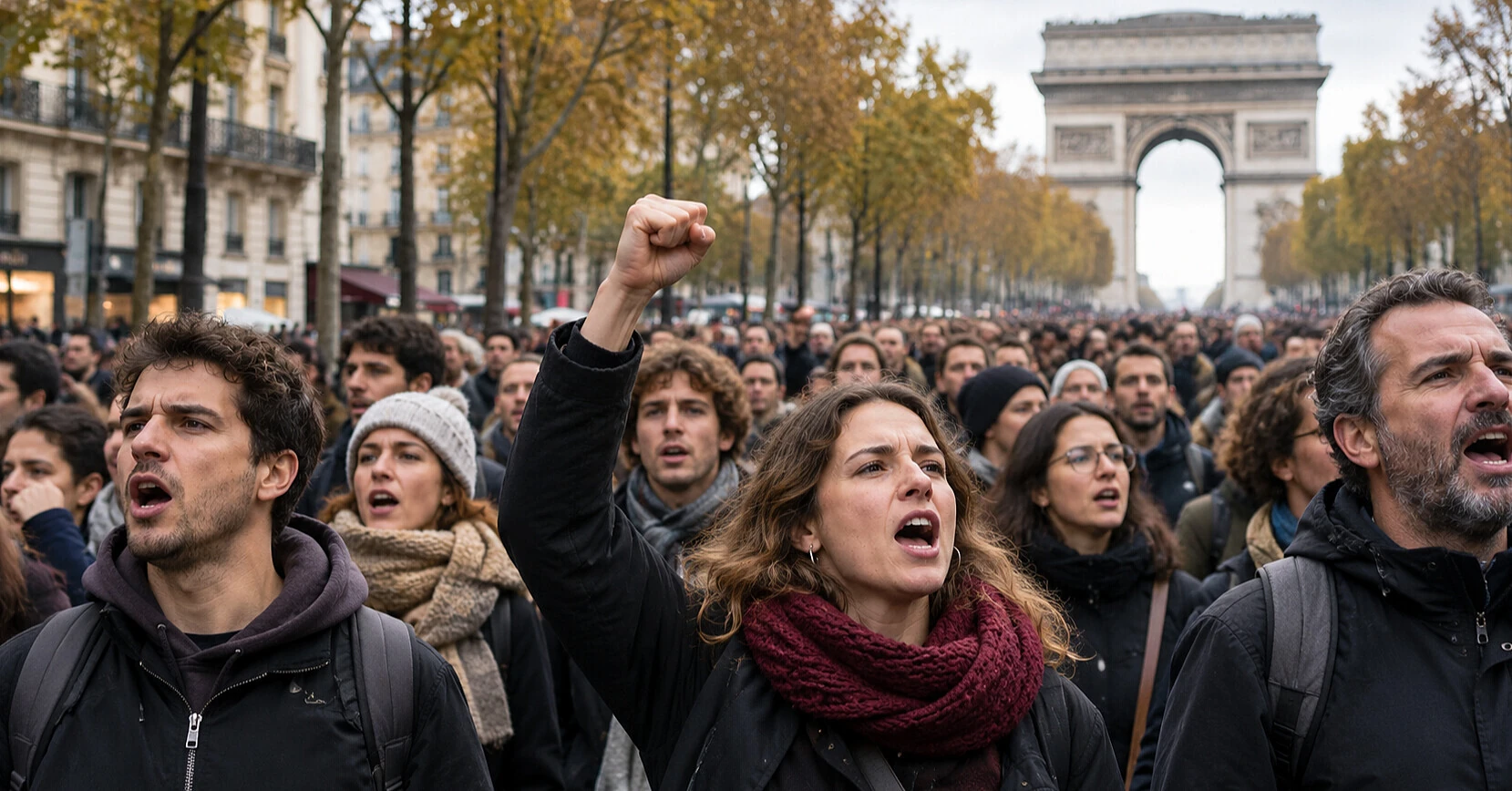
On November 5, a massive nationwide strike took place in France with the participation of hundreds of thousands of people. The protesters demanded wage increases, increased funding for public services, and measures against the rising cost of living. The actions affected rail transport, educational institutions, and the work of enterprises. Against the backdrop of mass demonstrations, the government announced new negotiations with trade unions and employers.
According to Le Monde, the preliminary estimate of the French Ministry of the Interior is about 600,000 participants in the demonstrations. At the same time, the largest trade union confederation CGT reported nearly 1.6 million protesters.
In total, more than 250 demonstrations and mass gatherings were organized across the country. According to CGT estimates, about 350,000 people took to the streets in Paris, 150,000 in Marseille, 120,000 in Bordeaux, 100,000 in Lille, and 80,000 in Toulouse.
The strike was organized by the leading French trade union confederations, including CGT, CFDT, FO, UNSA, and FSU. Workers from the public and private sectors, students, schoolchildren, pensioners, and participants of the "yellow vests" movement joined the actions.
The main demands of the protesters were an increase in the minimum wage, a review of wage levels, job protection, and increased spending on education and healthcare.
The strike disrupted transport and educational institutions
One of the most notable consequences of the strike was disruptions in rail transport. All four major unions of the French railway operator SNCF called on employees to stop work from the evening of November 4 to the morning of November 6.
According to Le Monde, the restrictions primarily affected regional trains, suburban services, and certain intercity routes.
In the Paris region, most metro, bus, and tram lines continued to operate almost normally. However, on the RER B suburban train line, the number of services was reduced: on the southern section, about two-thirds of trains ran; on the northern section, about half.
Serious disruptions also occurred in the education system. According to the teachers' union SNES-FSU, 52% of employees in the categories of secondary education covered by its estimate participated in the strike. About a thousand high schools were fully or partially blocked or temporarily closed by administrations.
The French Ministry of Education, for its part, estimated the proportion of striking workers in public primary schools at 17.54%.
Students and teachers demanded increased funding for education, improved learning conditions, and a review of certain reforms. Student organizations also opposed cuts in university spending and the worsening employment prospects for young people.
The actions affected industrial enterprises, ports, postal services, and other sectors. According to CGT, more than 2,000 work stoppages were recorded in industry, construction, trade, and services.
Clashes occurred in several cities
The French authorities had deployed about 70,000 police officers and gendarmes in advance to ensure the security of the demonstrations.
In Paris, Marseille, and Rennes, clashes occurred between certain groups of participants and law enforcement. Police used tear gas and made arrests.
In Rennes, the authorities reported that more than 20,000 people took part in the demonstration. After the clashes, the column's movement was disrupted, and law enforcement isolated a group of suspected rioters.
During the Paris protest, Le Monde correspondents also reported injuries resulting from clashes with the police.
The French government scheduled negotiations with trade unions
Against the backdrop of mass protests, French Prime Minister Sébastien Lecornu announced a special social conference to be held on November 9. Representatives of the largest trade unions and employers' associations will take part.
As the French government reported, the main topic of the negotiations will be the purchasing power of the population and wage levels.
Lecornu instructed the Minister of Labour to complete preliminary consultations with social partners by Sunday, November 8.
One of the main issues will be a possible increase in the minimum wage — SMIC.
The CFDT union is demanding an increase of 100 euros per month after tax and mandatory deductions. CGT insists on a 10% increase and the introduction of a wage indexation mechanism in line with price growth.
The government has not yet announced an agreed increase in the SMIC. Officials acknowledge the need to discuss wages, but point to the possible consequences of additional spending for businesses and employment.
Unions warned that if no concrete decisions are made, protests may continue. Participants of the "yellow vests" movement have already called for new demonstrations on November 6 and 7.