Shares of US tech giants continued their rapid decline
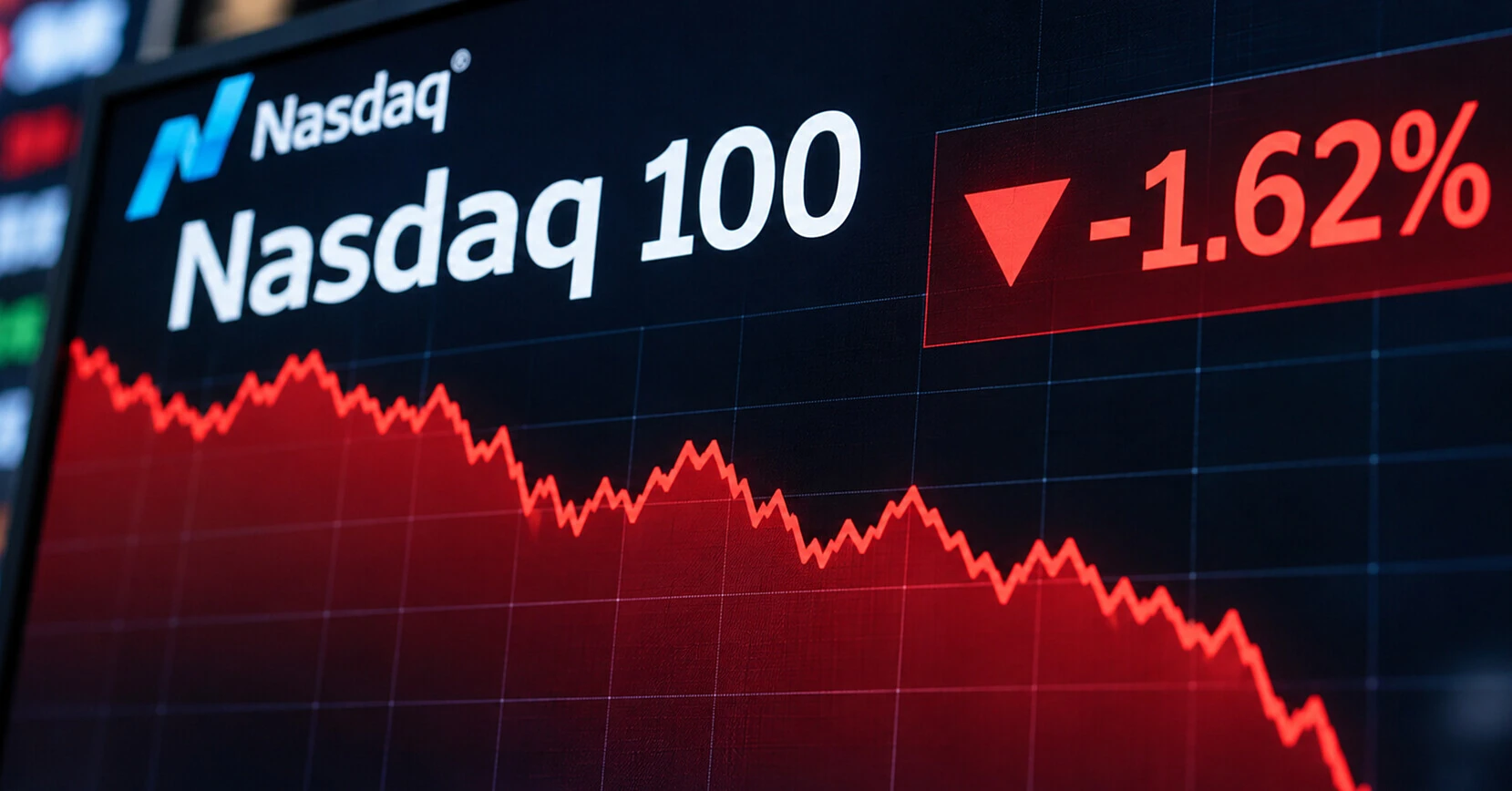
The US stock index Nasdaq 100 lost more than 4% on Wednesday, November 25, once again entering bear market territory. Investors continue to shed shares of technology companies amid growing doubts about the profitability of massive investments in artificial intelligence.
This was reported by Financial Times.
At the start of the trading session, the Nasdaq 100 fell to 25,116.71 points, losing 4.19% from the previous close. The index's decline from its last peak reached 20% – a level traditionally considered the threshold of a bear market.
The most significant losses during trading were suffered by companies linked to the development of artificial intelligence and semiconductor manufacturing:
- Nvidia – about 9%;
- Broadcom – about 7%;
- Micron Technology – 11%;
- Anthropic – about 9%.
Shares of artificial intelligence developer Anthropic fell below $75, reducing the company's market capitalization to less than $1 trillion.
The sell-off occurred for the second consecutive day. On Monday, the Nasdaq 100 rose almost 7% after Jensen Huang returned as CEO of Nvidia. Shares of the chipmaker themselves then rose by more than 31%. However, already on Tuesday the technology index lost about 2%, and Nvidia shares – almost 6%.
Investors move into safe-haven assets
Market participants increasingly question the ability of technology corporations to generate sufficient profits amid multibillion-dollar spending on building data centers and developing AI infrastructure.
Additional pressure on the stock market comes from accelerating inflation in the US and the prospect of further interest rate hikes by the Federal Reserve. In October, the annual growth of the Personal Consumption Expenditures (PCE) price index accelerated from 3.6% to 3.8%.
Another factor of uncertainty were proposals announced by the Donald Trump administration regarding new import tariffs on 14 trading partners, including China, the European Union, Japan, and South Korea.
Against the backdrop of falling stocks, investors increased demand for US government bonds. The yield on ten-year US Treasury notes fell to 4.82%, and the VIX volatility index, which reflects stock market participants' expectations for future price fluctuations, was above 35 points.
Recall that on the morning of November 25, Asian stock markets also suffered significant losses. South Korea's Kospi fell by more than 6%, Japan's Nikkei 225 – by 2.8%.