Russia resumed exporting diesel to Turkey and Brazil after a deal with the US
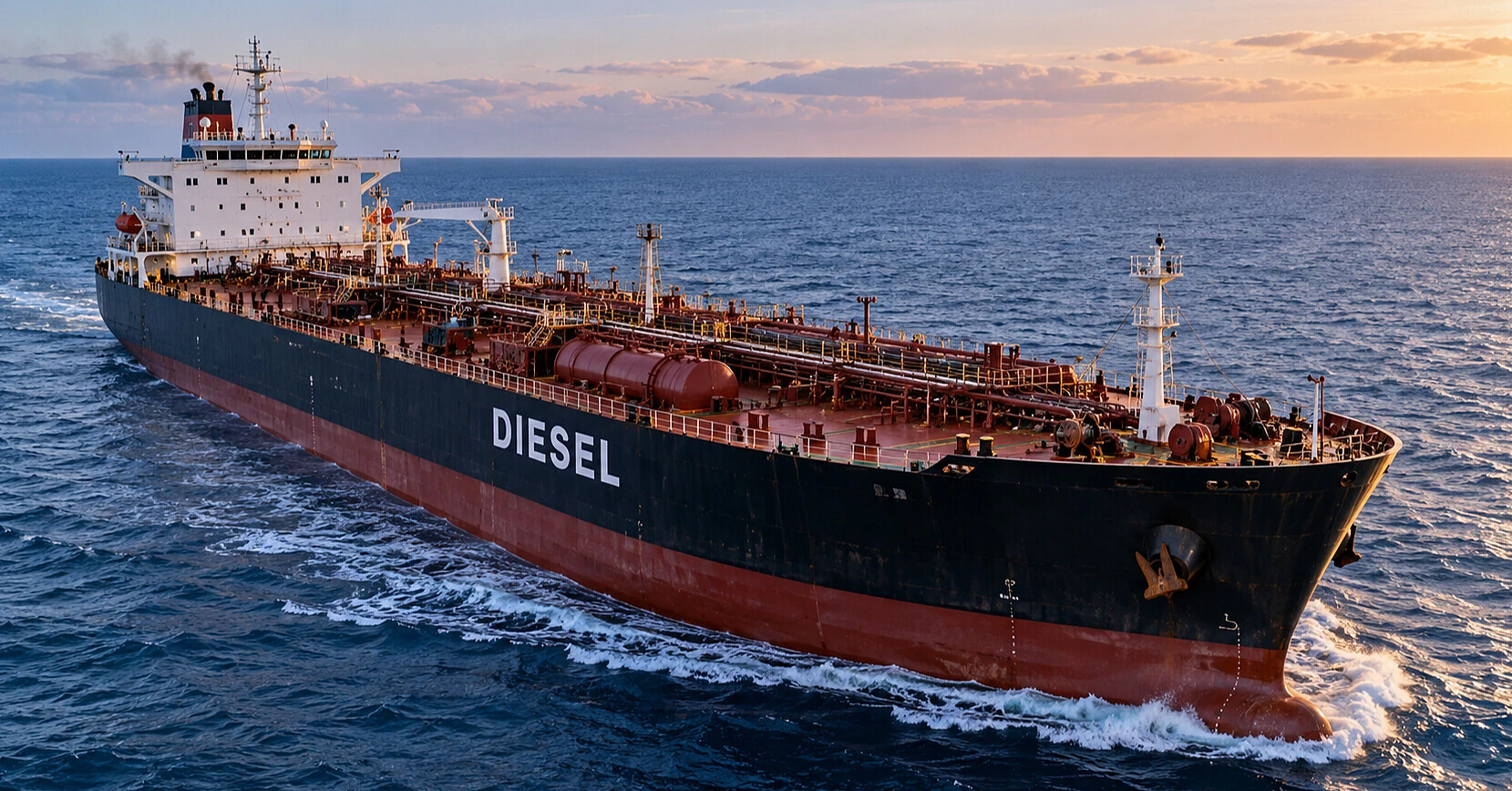
Russia has begun to restore diesel fuel exports after the lifting of restrictions agreed with the mediation of the United States. The first tankers with Russian fuel headed to Turkey and Brazil — countries that remain the largest buyers of Russian diesel after the introduction of Western sanctions.
Reuters reported this on October 20, citing data from shipping monitoring by Kpler and LSEG.
According to analytics firms, at least two tankers with Russian diesel fuel departed from the Baltic port of Primorsk and headed to foreign buyers.
The tanker Leruo left Primorsk on October 16 and indicated the Brazilian port of Manaus as its destination. Another tanker, Dolunay, departed the Russian port on October 14 and is heading to Turkish Alanya.
Each vessel carries about 300,000 barrels of diesel fuel. Thus, the total volume of the two shipments is estimated at approximately 600,000 barrels.
Ship tracking data confirms the dispatch of cargoes and the declared routes, but it does not mean that the fuel has already been delivered to the end buyers.
After the export ban was lifted, Russian diesel also began flowing again to Morocco. According to Kpler estimates, from October 11 to 20 Russia exported about 210,000 metric tons of diesel fuel, which corresponds to approximately 1.56 million barrels.
Turkey and Brazil remain the main destinations for Russian diesel exports since 2023, when Western sanctions after Russia's full-scale invasion of Ukraine significantly changed international routes for oil product supplies.
According to Kpler data, since the beginning of 2026, Turkey accounted for about 34% of Russian diesel fuel export supplies, or 95,000 barrels per day. Brazil received 24% of exports, which is about 66,000 barrels per day. Another approximately 10% went to Morocco.
However, overall Russian export volumes remain significantly below last year's. Since the beginning of 2026, Russia has supplied to foreign markets on average about 345,000 barrels of diesel per day — 41% less than a year earlier.
The reduction in exports was partly due to Ukrainian strikes on Russian oil refineries, which led to damage to production capacity and a shortage of oil products on the domestic market of the Russian Federation.
To stabilize supply, Moscow previously restricted foreign supplies of diesel, but on October 9 announced the start of lifting the ban after an agreement with U.S. President Donald Trump.
On the same day, the U.S. Department of the Treasury issued a special license No. 135, allowing certain operations for the sale, delivery, unloading and import of diesel fuel of Russian origin.
However, European Union and United Kingdom restrictions on imports of Russian oil products remain in effect.
Earlier, the International Energy Agency expressed doubts about Russia's ability to quickly increase diesel exports even after the easing of restrictions. The main obstacle remains damage to oil refineries and the reduction of available production capacity.
Thus, the dispatch of new tankers confirms the gradual restoration of export routes, but does not yet indicate a return of Russian supplies to previous volumes.
Based on materials from: Reuters, U.S. Department of the Treasury.