Protests against the government intensify in Albania: university lecturers join the actions
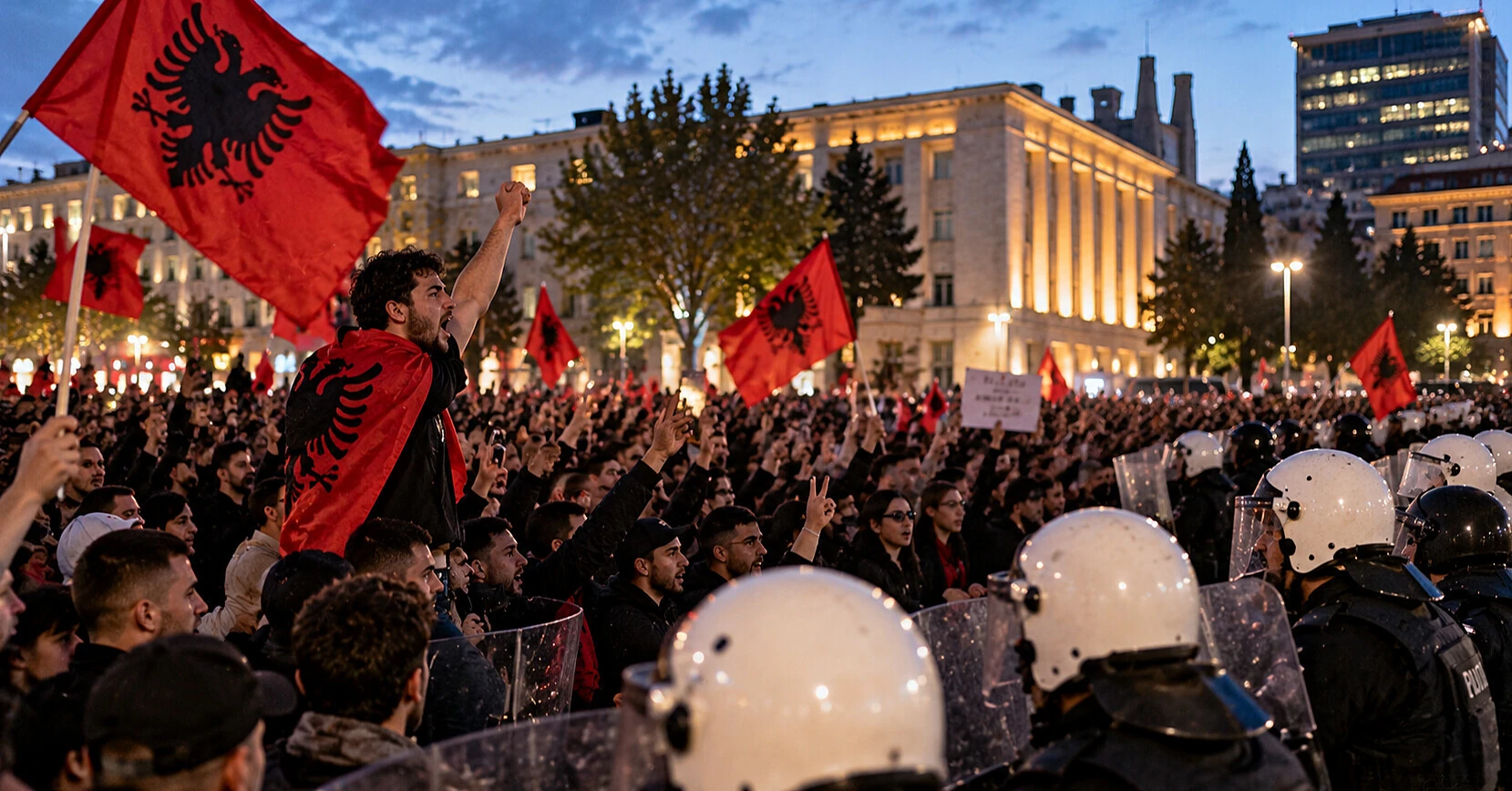
Mass anti-government protests in Albania have continued for the second week. On October 20, in the capital Tirana, university lecturers joined students and schoolchildren, and organisers announced an expansion of the protest movement. Participants are demanding the resignation of Prime Minister Edi Rama, improvements in education and the fight against corruption.
This is reported by Bloomberg and the Albanian outlet Euronews Albania.
On Tuesday, protesters again gathered in central Tirana and headed to the government building. Around midday, another large group of students joined the demonstrators, marching from Skanderbeg Square.
Later, participants moved to the Ministry of Education, where police reinforced security and deployed special units with protective equipment. Riot control vehicles were also nearby.
During the previous week, protests repeatedly involved clashes with law enforcement. Some demonstrators threw stones, firecrackers and Molotov cocktails, damaging administrative buildings and cars. Police used tear gas and water cannons.
However, on October 20, the daytime demonstration was relatively calm. Despite tensions in previous days, no large-scale clashes between protesters and police were observed in the afternoon.
Universities prepare for a boycott of classes
One of the new developments was the decision of the union of Albanian university lecturers to join the student movement.
Union head Sander Kovaci announced a boycott of classes in all universities across the country starting October 21. A new joint demonstration of lecturers and students is also scheduled for Wednesday near the government building.
Protesters oppose the high cost of tuition, the unsatisfactory state of university infrastructure and corruption. Political demands include the resignation of Rama's government and systemic reforms.
The prime minister offered to negotiate with representatives of the student movement. Red chairs with an invitation to dialogue were placed near the government building, but demonstrators rejected the offer and symbolically turned them over.
Police report hundreds detained
According to Tirana police data, 271 people were detained in the first seven days of protests. Following the protest on October 19 alone, 33 participants were arrested and another 41 faced criminal proceedings. Seven police officers were injured during the clashes.
However, on October 20, a Tirana court ordered the release of 13 previously detained protesters, imposing softer restrictive measures.
Prime Minister Edi Rama refused to resign. He accused his political opponents of trying to use the protests to destabilise the country, also alleging potential external interference. No evidence for these claims was presented.
The current wave of unrest grew out of environmental protests that began in spring 2026. Initially, demonstrators opposed the construction of tourist resorts on the Adriatic coast, including projects linked to companies owned by Jared Kushner, son-in-law of U.S. President Donald Trump.
Subsequently, environmental demands merged with grievances about education costs, living conditions and government policies. The movement has taken on a nationwide character, and participants have begun demanding a change of leadership.
Albania is a candidate for European Union membership and hopes to complete the integration process by 2030. Ongoing unrest creates additional challenges for the government, which is simultaneously trying to implement reforms and meet EU obligations.